
Rasmus S. Nordal Lecture
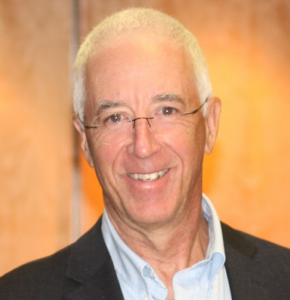
Professor emeritus Guy Doré
Civil and water engineering department, Université Laval, Québec, Kanada
REASSESSING FROST ACTION IN ME PAVEMENT DESIGN
Frost action is a leading cause of premature failure and pavement degradation in cold climate regions, necessitating robust design considerations. Although mechanistic-empirical (ME) principles have become the accepted standard for modern pavement design and analysis worldwide, the practice of accounting for frost effects frequently reverts to outdated empirical methods or rules of thumb. This disconnect between sophisticated general design and simplistic frost consideration leads to inaccurate performance predictions and suboptimal, less durable pavements. This paper examines and critiques the limitations inherent in current cold region design practices, specifically focusing on the insufficient application of fundamental mechanistic principles to complex frost phenomena. The discussion advocates for the adoption and deeper integration of ME methodologies to accurately model, predict, and ultimately mitigate the detrimental impacts of frost action on pavement infrastructure.
Professor emeritus Guy Doré is a Professor Emeritus in the Department of Civil Engineering at Laval University, renowned for his expertise in pavement engineering and cold regions engineering.
Dr. Doré holds a B.Sc. in Geological Engineering (1980), an M.Sc. in Engineering Geology, and a Ph.D. in Civil Engineering, all from Laval University.
Throughout his career, he taught several courses and was highly active in research focusing on the response and performance of pavements in cold climates and permafrost engineering. His significant contributions include holding the NSERC Industrial Research Chair on the interaction between trucks, climate, and pavements, and leading the “ARQULUK” research program on permafrost engineering applied to transportation infrastructure.
With more than 200 peer-reviewed publications, Dr. Doré is a leading voice in the field. He notably co-authored the influential books Cold Regions Pavement Engineering (ASCE Press/McGraw Hill) and Guidelines for development and management of transportation infrastructure in permafrost regions (Transportation Association of Canada).
Though retired, Dr. Doré remains actively involved in teaching and research related to cold regions engineering. He is also the current president of the Canadian Permafrost Association.

Distinguished Lecture
Prof. Imad L. Al-Qadi
University of Illinois at Urbana-Champaign
INNOVATIVE FLEXIBLE PAVEMENTS: ENERGY-EFFICIENT AND RESILIENT FOR FUTURE MOBILITY
A robust pavement infrastructure is crucial for protecting the environment, supporting the economy, and benefiting society. The emergence of autonomous and connected vehicles—including trucks—offers significant potential to reduce energy consumption, lower emissions, and cut costs, and enhance road safety. In light of these advancements, a holistic approach must be adopted in pavement technology: One that prioritizes safety, targets net-zero emissions, enhances resilience, and minimizes disruptions for both travelers and freight. The evolution of traffic patterns, such as the introduction of truck platoons and electric freight, presents new challenges for flexible pavement performance. Addressing these challenges requires innovative and optimized strategies that transform potential problems into opportunities. This presentation focuses on how such strategies can support the goal of achieving net-zero emissions by 2050.
Professor Imad L. Al-Qadi is the Grainger Distinguished Chair in Engineering and the founding Director of the Illinois Center for Transportation (ICT). Prior to that, he was the Charles E. Via, Jr. Professor at Virginia Tech. He has led more than 180 research projects to completion, authored/co-authored more than 1000 publications, and advised more than 100 PhD students and postdocs. Professor Al-Qadi has received numerous national and international honors and awards, including the NSF Young Investigator Award, the IGS Award, ASCE James Laurie Prize, ARTBA Steinberg Award, ASCE Turner Award, TRR D. Grant Mickle Award and Woods Award, the ASCE Robert Horonjeff Airport Transportation Award, and the French Limoges Medal. He is an Emeritus Member of TRB and a Life member of AAPT. He served as the President of the ASCE T&DI Board of Governors and the Chair of the APSE Board of Directors and is the Editor-in-Chief of the International Journal of Pavement Engineering. In 2010, he was elected as the inaugural ASCE Distinguished Member and in 2023 he was elected an APSE Distinguished Member. He was the 2023 recipient of the TRB Roy W. Crumb Distinguished Service Award, the 2024 UIUC Executive Officer Distinguished Leadership Award, and the 2024 U of I President’s Executive Leadership Program Fellow. In 2024, he received the CUTC Lifetime Achievement Award for University Transportation Education and Research. He delivered more than 65 keynote and distinguished lectures, including the inaugural Rasmus S. Nordal Lecture.

Keynote Lecture
Prof. Lev Khazanovich (Anthony Gill Chair Professor)
Department of Civil and Environmental Engineering, University of Pittsburgh, USA
ADVANCEMENTS IN MECHANISTIC–EMPIRICAL DESIGN OF JOINTED CONCRETE PAVEMENTS IN THE U.S.
Concrete pavements need to be designed to carry any tire pressure, weight, and volume of heavy traffic for extended periods of time. Over the last three decades, significant advancements have been achieved in the mechanistic–empirical design of concrete pavements. Realistic modeling of jointed plain concrete pavements (JPCP) requires modifying the classical Westergaard model to better capture concrete pavement behavior, improving mathematical modeling, and integrating machine-learning techniques to obtain computationally efficient performance predictions.
This talk discusses the major milestones in the development of the models incorporated into the latest version of AASHTO Ware Pavement ME Design (version 3.0), as well as ongoing research in the United States aimed at improving these procedures. The presentation will also highlight how international cooperation has contributed to advancing the state of the art in rigid pavement design and the importance of strengthening this cooperation in the future.
Professor Lev Khazanovich is the Anthony Gill Chair Professor of Civil Engineering at the University of Pittsburgh and an internationally recognized expert in the structural modeling, evaluation, and performance prediction of concrete pavements. Dr. Khazanovich was a member of the rigid pavement leadership team that developed the Mechanistic-Empirical Pavement Design Guide adopted by the American Association of State Highway and Transportation Officials (AASHTO). He has served as Principal Investigator or co-Principal Investigator on numerous high-profile research projects sponsored by organizations such as the Federal Highway Administration, the Department of Energy, the National Cooperative Highway Research Program, the Strategic Highway Research Program, and various state transportation agencies. He served as Principal Investigator for NCHRP project 01-51, “A Model for Incorporating Slab/Underlying Layer Interaction into the MEPDG Concrete Pavement Analysis Procedures,” which resulted in the development of the rigid pavement performance models implemented in AASHTOWarePavement ME Design. He was a lead developer of the finite element program, ISLAB2000. He is currently serving as Principal Investigator for NCHRP project 01-64, “Development of Longitudinal Cracking Models for Concrete Pavements.”
Dr. Khazanovich serves as an Associate Editor of the International Journal of Pavement Engineering. He is a founding member and a member of the Board of Governors of the Academy of Pavement Science and Engineering. His papers received awards from the Transportation Research Board and International Society for Concrete pavements.
Keynote Lecture
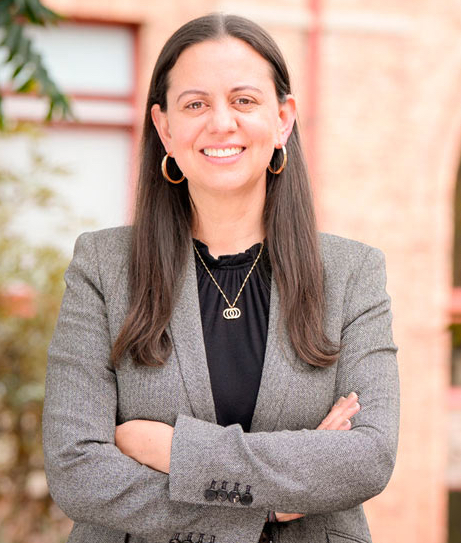
Prof. Silvia Caro
Department of Civil and Environmental Engineering, Universidad de los Andes, Bogotá, Columbia
UNDERSTANDING SELF-HEALING TECHNIQUES IN ASPHALT MIXTURES TO IMPROVE PAVEMENT DURABILITY
The use of encapsulated rejuvenators in asphalt mixtures is attracting increasing attention as a self-healing technique to improve pavement durability. However, several aspects must be resolved before industrial application. These include optimising capsule design; understanding the effect of capsule incorporation on the mechanical response of the mixture during the early stage of pavement service life; clarifying the micromechanical mechanisms governing capsule activation (i.e. the release of the healing agent); and quantifying healing efficiency under different loading and environmental conditions. This work presents recent advances addressing several of these aspects at the bitumen and asphalt mortar scales, using computational mechanics and experimental testing. For this purpose, mechanical and rheological characterisation is combined with fatigue–healing and semi-circular bending (SCB) fracture–healing tests conducted at different temperatures and with varying rest periods. The results provide insight into the mechanical mechanisms controlling damage recovery and self-healing efficiency in asphalt materials containing encapsulated rejuvenators, while also identifying key aspects that require further investigation.
Silvia Caro is a Full Professor in the Department of Civil and Environmental Engineering at Universidad de los Andes in Colombia, where she also serves as Vice President for Academic Affairs. Her expertise includes advanced characterisation and modelling of highway materials, with a focus on bituminous materials. Her work focuses on micromechanical characterisation, environmental–mechanical coupling, uncertainty quantification, and the design of sustainable road materials, including self-healing systems and bio-binders. She has served as Vice President and President of the Academy of Pavement Science and Engineering (APSE) and as Chair of the Materials Section of the Transportation Research Board (TRB). She is Co-Editor-in-Chief of Road Materials and Pavement Design and an Associate Editor of the ASCE Journal of Materials in Civil Engineering. She has led multiple national and international research projects and has authored more than 70 journal articles and over 90 conference papers.
Keynote Lecture
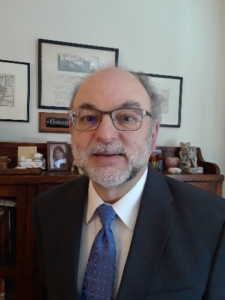
Dr. David R. Brill, P.E.
Airport Technology R&D Branch, William J. Hughes Technical Center for Advanced Aerospace
Atlantic City International Airport, New Jersey, USA
THE CHALLENGE OF DATA FOR AIRPORT PAVEMENT DESIGN
Over the last 50 years, the pavement engineering field has undergone two important revolutions. Beginning in the 1970s, high-powered computers allowed us to generate models from relatively small sets of representative data. Machine learning now allows us to exploit much larger datasets than we could previously, but there are new challenges:
Airport Technology R&D Branch, William J. Hughes Technical Center for Advanced Aerospace
Atlantic City International Airport, New Jersey, USA
• Managing a large volume of data and ensuring its integrity (and availability).
• Avoiding underdetermined and overdetermined models.
• Ensuring interpretability and physical validity of data-based models.
This lecture will address data challenges in airport pavement modelling, based on 15 years of FAA research on long-term performance prediction. A persistent issue is data imbalance. FAA databases contain significant historical performance data for well-performing airport pavements, but a much smaller quantity for unserviceable or failed pavement features. Paradoxically, we must consider biased data resulting from good pavement management. The use of methods such as synthetic data augmentation to prevent underfitting will be discussed.
Dr. David R. Brill has been a research civil engineer with the FAA since 1999 and has led numerous airport pavement R&D projects. His work includes the development of FAARFIELD 2.0, the FAA’s airport pavement design software, as well as full-scale pavement testing at the FAA National Airport Pavement Test Facility. As a technical advisor to the ICAO Airport Pavement Expert Group (APEG), he contributed to the development of the ACR-PCR method for reporting airport pavement strength. He has authored more than 70 technical papers and reports on topics such as full-scale testing, 3D finite element modelling for airport pavement design, and the application of machine learning methods to pavement design.
Dr. Brill earned his B.S.E. from the University of Pennsylvania and his doctorate in civil engineering from Rutgers University. He is a long-standing member of ASCE and has served on multiple TRB committees. He has been a member of the BCRRA International Advisory Committee since 2003.
Keynote Lecture
University of Southampton, UK
prof. William Powrie
THE DESIGN OF RAILWAY TRACK FORMATIONS: A SOIL MECHANICS PERSPECTIVE
Predicting the performance of railway track is challenging due to the complex, repeated nature of loading over many millions of cycles throughout the service life of the infrastructure. Reliable assessment requires characterizing the often very small rate of accumulated plastic settlement and, critically, understanding the development of differential settlements along the track. These challenges are compounded by the difficulty of reproducing the real behavior of soils and soil-like geomaterials—such as traditional railway ballast—within constitutive models. In addition, degradation of the trackbed materials and the underlying ground or earthworks, for example due to mechanical and environmental effects, may significantly influence long-term performance. This lecture will discuss these issues and explore how fundamental soil mechanics principles and advanced constitutive modelling can be applied to understand and quantify their impact on railway track and trackbed performance.
Prof. William Powrie is Professor of Geotechnical Engineering at the University of Southampton and a Geotechnical Consultant to the international groundwater specialists WJ. He is widely recognized for his work in transportation and environmental geotechnics and was elected a Fellow of the Royal Academy of Engineering in 2009. His research interests include slopes and retaining walls, groundwater control, railway track performance, landfill engineering, and the characterization and laboratory testing of “difficult” soils and soil-like materials. He has led nine major collaborative research grants, including the SUE Waste Consortium, Rail Research UK, Track21 and Track to the Future. He chairs HS2’s Geotechnical Independent Expert Panel and is a member of the UK Department for Transport Science Advisory Council. He has delivered several prestigious lectures, including the Zeng Gui-Xi Lecture (2016), the ICE Unwin Lecture (2018) and the 3rd ISSMGE Ralph Roscoe Proctor Lecture (2021), and received the British Geotechnical Association Medal in 2017. He is a co-author of the UK Guide to Track Stiffness and CIRIA guides on embedded retaining walls (C760) and groundwater control (C750), and the author of the internationally acclaimed textbook Soil Mechanics: Concepts and Applications. In 2025, he was appointed Commander of the Order of the British Empire (CBE) for services to engineering.
Keynote Lecture
Assoc. Prof. Aleš Žnidarič, ZAG – Slovenian National Building and Civil Engineering Institute
ROAD INFRASTRUCTURE CHALLENGES POSED BY HEAVY-DUTY VEHICLE LOADS
Accurate knowledge of heavy vehicle traffic loading is essential for the sustainable management of road and bridge infrastructure. Increasing freight demand, evolving vehicle technologies, and the advanced age of European transport assets have intensified concerns about pavement deterioration and bridge safety. Many existing structures were designed for substantially lower traffic loads and are now operating closer to their capacity limits. This paper reviews heavy vehicle loading characteristics in Europe, highlighting differences between national and international haulage, regulatory frameworks, and the prevalence and causes of vehicle overloading. The role of traffic loading measurement technologies is examined, with emphasis on static weighing, pavement-based Weigh-In-Motion (WIM), and Bridge Weigh-In-Motion (B-WIM) systems, including their accuracy, applicability, and limitations. The application of WIM data in pavement engineering is discussed, focusing on axle-load spectra, equivalent axle load concepts, and mechanistic-empirical design approaches that enable realistic fatigue and rutting predictions. For bridges, advanced traffic load modelling, dynamic amplification assessment, and soft load testing using B-WIM are presented as effective tools for evaluating ageing and deteriorated structures under real traffic conditions. The paper demonstrates that reliable, high quality WIM data enables more realistic evaluation of infrastructure performance, supports targeted enforcement strategies, reduces unnecessary interventions, and facilitates informed decisions on maintenance, rehabilitation, and long-term asset management.
Assist. Prof. Dr. Aleš Žnidarič is director of the Slovenian National Building and Civil Engineering Institute and President of FEHRL. He is widely recognized for his work in bridge engineering and transport infrastructure, with more than 35 years of experience in bridge condition and safety assessment, traffic loading, weigh-in-motion (WIM/B-WIM) systems, and structural health monitoring. His research and professional interests focus on translating advanced measurement and monitoring methods into practical tools for bridge management, safety assessment, and infrastructure asset performance optimisation.He has contributed to over 20 international research projects, leading several work packages, and has coordinated two European Commission Framework Programme projects, CERTAIN (FP6) and TRA2008 CSA (FP7).He is a board member of ISWIM and an active member of international technical bodies, including IABMAS and the Transport Research Board. He has contributed to policy and practice as a member of the OECD International Transport Forum Working Group on Policies to Extend the Life of Road Assets, has participated in several bridge-related committees of PIARC, and represented the Slovenian Infrastructure Agency in the Innovation Working Group of CEDR.In addition, he has played a key role in the organisation of major international events, serving as Chair of the Programme Committee of Transport Research Arena 2008 and the 2018 Slovenian Congress of Transport and Transport Infrastructure, and regularly contributes to programme committees of conferences such as EPAM, IABMAS, and ICWIM.